Gamification
Gamification is the use of game design (mechanics and dynamics) in what is typically considered non-game environments such as the classroom.
Reference: https://doi.org/10.1017/CBO9781316091968.014
Gamification is the use of game design mechanics — levels, badges, points, challenges, competition — in learning environments. The difference between gamification that works and gamification that backfires lies in whether the mechanics reinforce learning behaviors or distract from them.
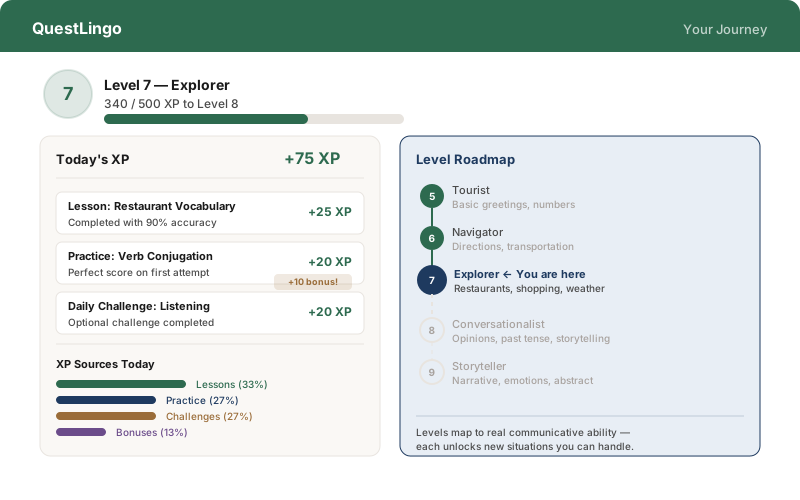
Tie experience points and levels to demonstrated communicative ability, not just task completion
This language app maps XP and levels to real communicative milestones — Level 7 means “can handle restaurants, shopping, and weather,” not “completed 70% of lessons.” The level roadmap shows learners what each level unlocks in terms of real-world capability, making progression meaningful rather than arbitrary.
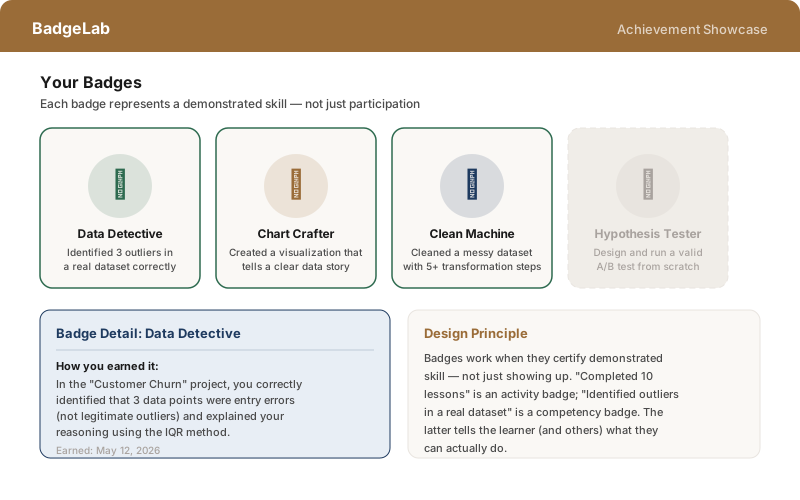
Award badges for demonstrated skill, not participation
These badges certify specific competencies — “identified outliers using the IQR method,” not “completed the outliers module.” The expanded detail view shows exactly what the learner did to earn the badge, turning it into evidence of capability rather than a participation trophy. Locked badges show the learner what they are working toward.
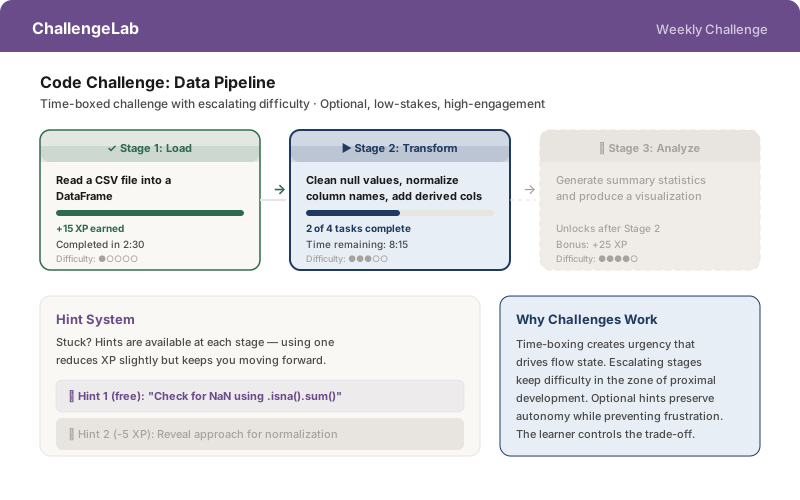
Structure challenges with escalating difficulty, time-boxing, and optional hints
This coding challenge breaks a complex task into three escalating stages with a timer. Hints are available at a small XP cost, preserving learner autonomy: the learner decides whether to push through or get a nudge. Time-boxing creates productive urgency that drives flow state without the anxiety of a high-stakes assessment.
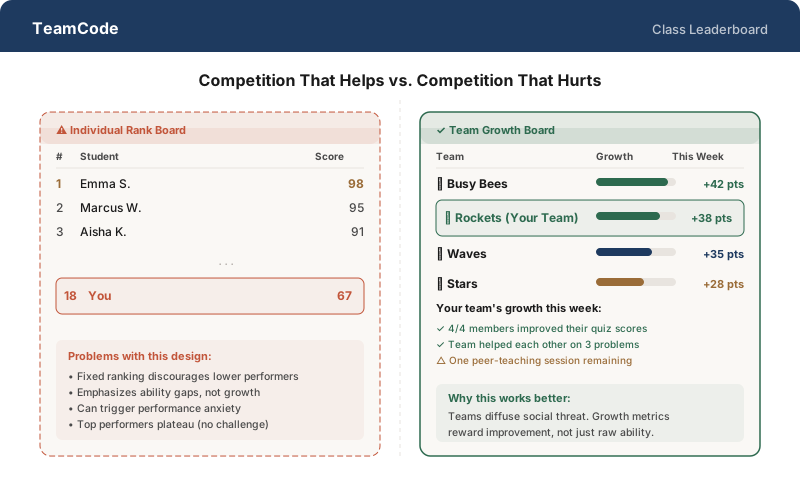
Use team-based growth metrics instead of individual rank leaderboards
Individual rank boards discourage lower performers and create anxiety; team-based growth boards reward collective improvement. The comparison shows how the same classroom data looks as a fixed rank list (demoralizing for #18) versus a team growth board (motivating for everyone). Growth metrics reward effort and improvement, not just raw ability.